We live closer to one another than ever. Yet many of us barely know the person living next door. Somewhere between locked gates, busy schedules, and life behind screens, did we lose something worth keeping?
There was a time when moving into a Malaysian neighbourhood meant eventually knowing almost everyone around you.
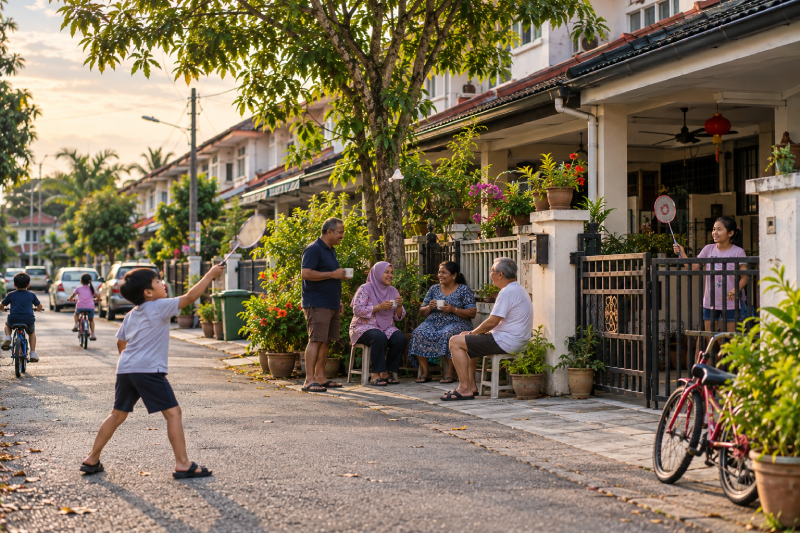
Aunty Ong, who lives two houses away, knew whose children were studying overseas. Uncle Siva across the road would tell you if you had forgotten to close your car window.
Children played badminton, table tennis, and cycling in the neighborhood or disappeared into one another’s houses after school.
Someone made too much curry? A bowl crossed the fence.
Someone’s rambutan tree produced too much fruit? Suddenly half the street had rambutan.
You didn’t necessarily have to be close friends.
You just knew one another.
Today, many of us live very differently.
We drive through a security gate, park inside our homes, close the automatic gate, and disappear indoors.
In condominiums, we can share a wall with someone for five years without knowing their name.
We may know what a stranger in Korea ate for breakfast because we follow her on Instagram but not know that the older man living three doors away has been admitted to hospital.
Perhaps that’s modern life.
But perhaps we’ve also lost something.
A simple “hello” used to mean more than hello
Neighbourliness was never uniquely Malaysian.
But Malaysia developed its own particularly interesting version.
Our neighbourhoods brought together different languages, religions and customs.
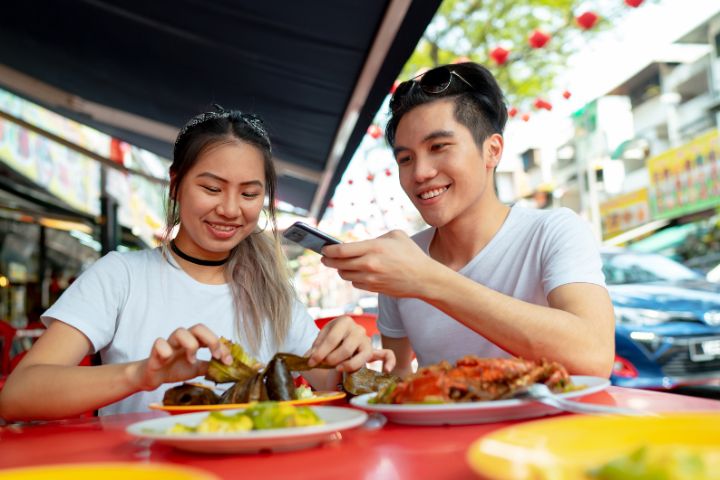
You might smell curry from one house, rendang from another and bak kut teh from somewhere down the road.
During Hari Raya, Chinese and Indian neighbours came over.
During Chinese New Year, mandarin oranges and cookies travelled between homes.
During Deepavali, murukku, ghee balls that melt in the mouth, somehow appeared in containers that would later be returned with something else inside.
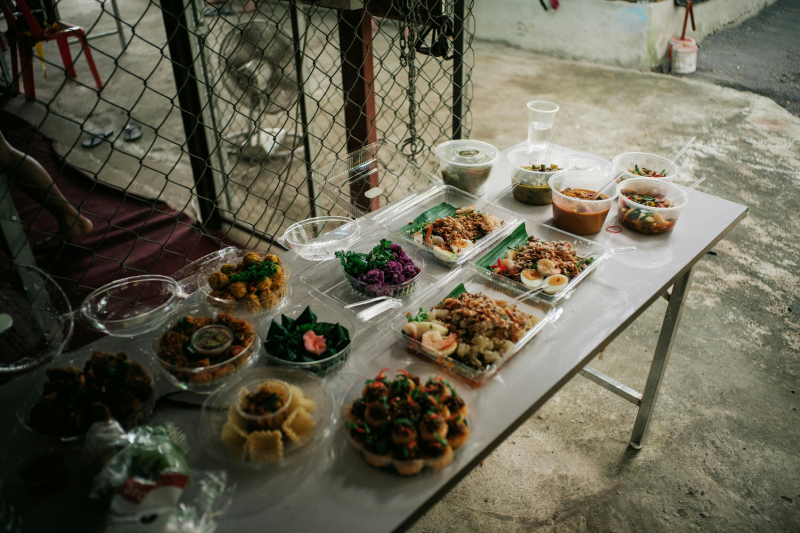
Nobody needed a diversity seminar.
People simply lived beside one another.
And through thousands of ordinary interactions, greetings at the gate, conversations while sweeping the floor outside, children playing badminton, table tennis, masak masak with real plants, cycling the neighborhood together, strangers gradually became neighbours.
That mattered.
Because trust is rarely created by grand speeches.
It is usually built through very small encounters repeated over many years.
So what changed?
Part of the answer is obvious: our lifestyles changed.
Many Malaysian households now have two working adults.
Commutes are longer. Children have tuition, activities, and screens. Weekends are packed. Housing changed too. Gated communities, condominiums, access cards, security guards and private facilities give us something valuable: security and privacy.
But they also make it remarkably easy to live beside people without interacting.
Technology quickens the transformation.
We have never been more connected.
Yet much of that connection happens with people who are somewhere else.
We message friends across the world while waiting for the lift beside someone whose name we don’t know.
This isn’t necessarily because people have become unfriendly.
Modern life has made isolation extremely convenient.
Privacy is not the enemy
It is tempting to romanticise the past.
We shouldn’t.
Traditional neighbourhood life had its irritating side too.
The same aunty who noticed your open car window might also notice what time you came home.
Everyone knowing everyone sometimes meant everyone knowing everyone’s business.
Younger generations understandably value privacy, independence and personal boundaries.
Those are not bad things.
And not every tradition deserves to survive simply because our grandparents practised it.
The question is not whether we should recreate the kampung of 50 years ago.
The better question is:
Can we keep the human connection without bringing back the intrusion?
Perhaps we can.
Why neighbours still matter
Neighbourliness can seem sentimental — until something goes wrong.
A parent falls at home.
A child needs help.
A pet escapes.
A parcel is left outside in the rain.
Your house suddenly has smoke coming from it while you’re at work.
In those moments, the person living twenty metres away may matter far more than the friend living twenty kilometres away.
Something larger is also at stake.
Malaysia frequently talks about unity.
We debate race relations, social cohesion and national identity.
But perhaps national unity doesn’t begin at the national level.
Maybe it begins much smaller.
With people who look different from us living beside us long enough to stop feeling like strangers.
It is difficult to fear an entire community when someone from that community is Uncle Kumar next door who helped jump-start your car.
Or Kak Aishah who sends over rendang every Raya.
Or Auntie Lim who keeps an eye on your house when you’re travelling.
Policies can encourage tolerance.
Everyday relationships create it.
Maybe the tradition worth preserving is very small
We don’t need to organise neighbourhood dinners every weekend.
We don’t need to know everyone’s personal life.
And we certainly don’t need to return to the days when the entire street knew you had a boyfriend before your parents did.
Maybe preserving neighbourliness starts with something much smaller.
Look up from the phone.
Smile in the lift.
Say hello.
Learn the name of the person next door.
Ask the elderly neighbour you haven’t seen for several days whether everything is okay.
Share the extra kuih instead of leaving it in the refrigerator until nobody wants it.
None of these actions will make headlines.
But traditions rarely disappear overnight.
They disappear when one generation quietly stops doing the small things the previous generation did.
And sometimes, preserving a value doesn’t require a campaign.
It just requires someone to practise it again.
So perhaps the next time you see your neighbour outside the gate, don’t just walk past.
Say hello.
You never know what might begin with that.
What do you think? Do you still know the people living around you or has your neighbourhood become a place where everyone comes home and closes the gate? Perhaps it’s worth asking: when was the last time you had a real conversation with your neighbour?