Something unusual happened to one of Malaysia’s best-known companies yesterday. AirAsia Group shares fell:
21.09% in one trading day.
They closed at:
50.5 sen.
That was their lowest level since December 2022. Sister company Capital A fell 16.36% to 23 sen. But the share price is not really the story ordinary Malaysians should focus on.
The bigger question is:
What happens to Malaysian flying if AirAsia has to become significantly smaller?
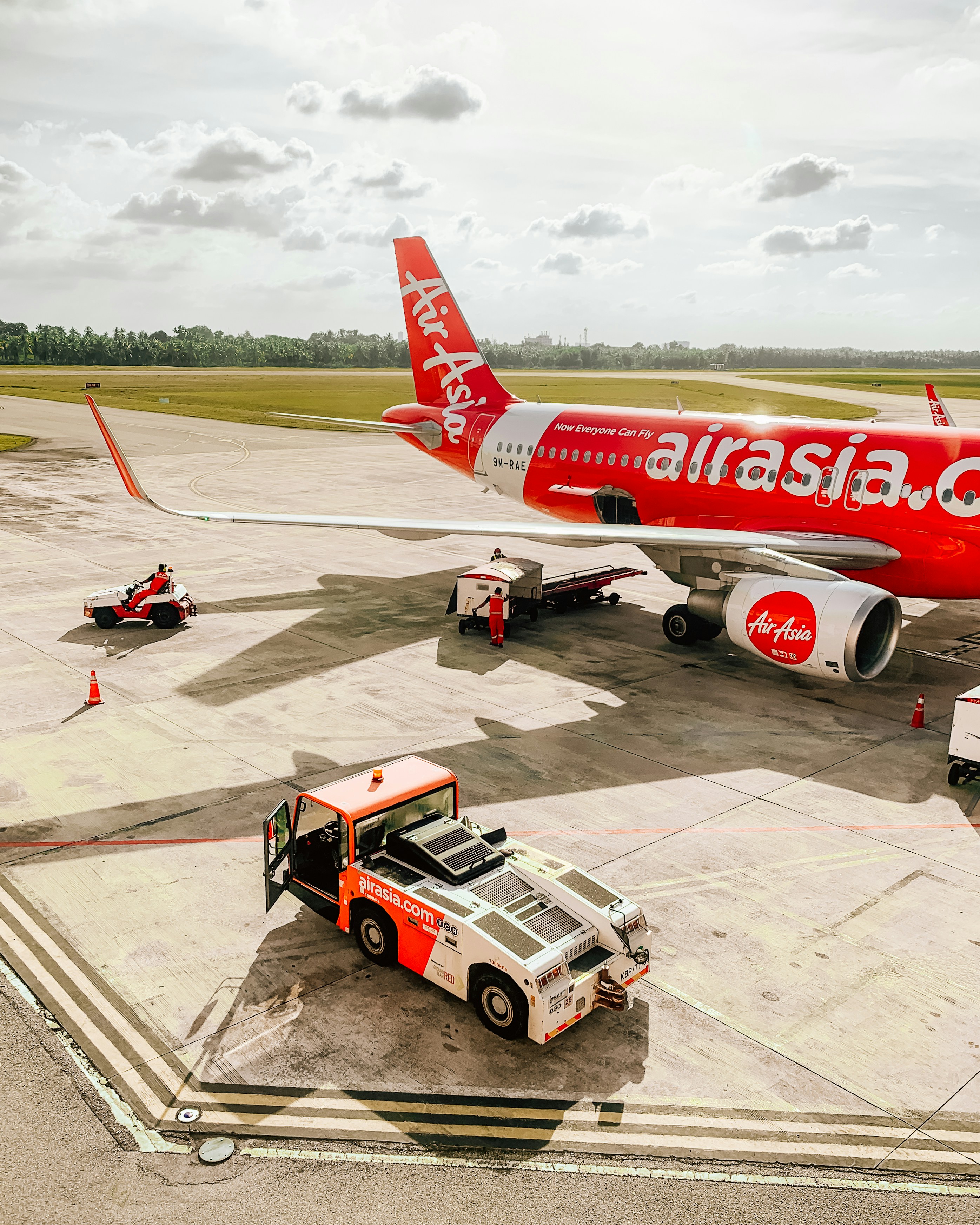
Why did investors suddenly become so worried?
Reuters reported that the Malaysian government has been talking with Malaysia Airlines and Batik Air about their ability to add domestic capacity if AirAsia’s financial position deteriorates. The discussions also involve the Finance Ministry and Malaysia Airports. That sounds dramatic. But an important distinction is necessary.
The government is doing scenario planning. That does not establish that AirAsia will fail. It does not mean Malaysia Airlines is taking it over.
And there is no confirmed government bailout.
Why would the government prepare for this?
Because AirAsia is unusually important to Malaysia’s transport system.
The airline carries roughly:
40% of Malaysia’s overall aviation market
and approximately:
60% of the domestic market.
If a small airline cuts ten flights, passengers can often move to competitors.
If the airline carrying six out of every ten domestic passengers reduces capacity substantially, replacing those seats becomes much harder.
What is happening to AirAsia financially?
The Middle East energy shock has hit airlines hard.
Reuters reported that average jet-fuel prices rose 66% quarter-on-quarter in the second quarter. AirAsia recorded a second-quarter net loss of: RM831 million.
At June 30 it had:
RM18.4 billion in current liabilities
and cash and bank balances of approximately:
RM954 million.
It also owes Malaysia Airports at least RM500 million, according to Reuters sources.
Does RM18.4 billion mean AirAsia is RM18.4 billion “in debt”?
Not exactly.
Current liabilities include obligations due within a year and are broader than conventional bank borrowing alone.
So we should not simply describe the entire RM18.4 billion as “debt”.
The useful point is that AirAsia has substantial near-term financial obligations relative to its available cash.
Is AirAsia trying to raise money?
Yes.
It is targeting up to:
US$1 billion in international financing
plus
RM700 million in local credit facilities.
AirAsia says the fundraising is primarily intended for debt restructuring, refinancing and strengthening its balance sheet. Reuters sources estimated the group may ultimately require at least US$3 billion in new capital.
That US$3 billion figure is an external estimate, not AirAsia’s stated funding requirement.
What is AirAsia already doing?
It has been reducing costs.
Measures include:
cutting underperforming routes, returning 25 older aircraft to lessors,
and renegotiating vendor contracts. Those actions can improve cash flow.
But cutting aircraft and routes also reduces capacity.
Why should passengers care about capacity?
Because airline pricing is partly a supply problem. Imagine 1,000 people want to fly from Kuala Lumpur to Kuching. There are 1,200 available seats.
Airlines compete aggressively to fill them.
Now imagine there are only:
800 seats.
Suddenly the airlines do not need to compete as hard.
Passengers compete for the seats instead.
That can push fares higher.
Couldn’t Malaysia Airlines and Batik Air simply add flights?
They can add some.
Batik Air says it could bring aircraft in quickly if necessary.
But replacing AirAsia at scale would require: aircraft, pilots, cabin crew, maintenance, airport slots and financing.
Malaysia Airlines and Batik Air reportedly told the government that organic expansion is possible, but absorbing a very large amount of AirAsia capacity would be more difficult without additional aircraft.
Why is East Malaysia especially important?
Because aviation there is basic connectivity.
Someone travelling from: Kuala Lumpur to Penang has alternatives.
They can drive. Take a bus. Take a train.
Someone travelling:
Kuala Lumpur → Kuching
does not. That makes affordable aviation particularly important to:
Sabah, Sarawak and Labuan.
Would the government rescue AirAsia?
No such decision has been announced.
And there is an important distinction between: protecting an airline
and protecting aviation connectivity.
Government could potentially support: routes, capacity, airports
or transition arrangements without necessarily rescuing shareholders.
That policy question has not yet been resolved publicly.
What should Malaysians watch next?
Not AirAsia’s share price alone.
Watch four practical indicators.
Funding
Does AirAsia complete its planned capital raising?
Aircraft
Does its active fleet continue shrinking?
Routes
Are more Malaysian services being reduced?
Fares
Does domestic capacity tightening begin appearing in ticket prices?
Those will tell us whether financial pressure is beginning to affect passengers.
TAKEAWAY
Yesterday’s 21% share-price fall looks dramatic.
But for most Malaysians, the important number is actually:
60%.
That is AirAsia’s approximate share of domestic aviation.
A company can restructure its finances. Investors can absorb losses.
But Malaysia cannot suddenly replace six out of every ten domestic airline seats. That is why AirAsia’s financial problem has become something bigger: a national connectivity and competition question.