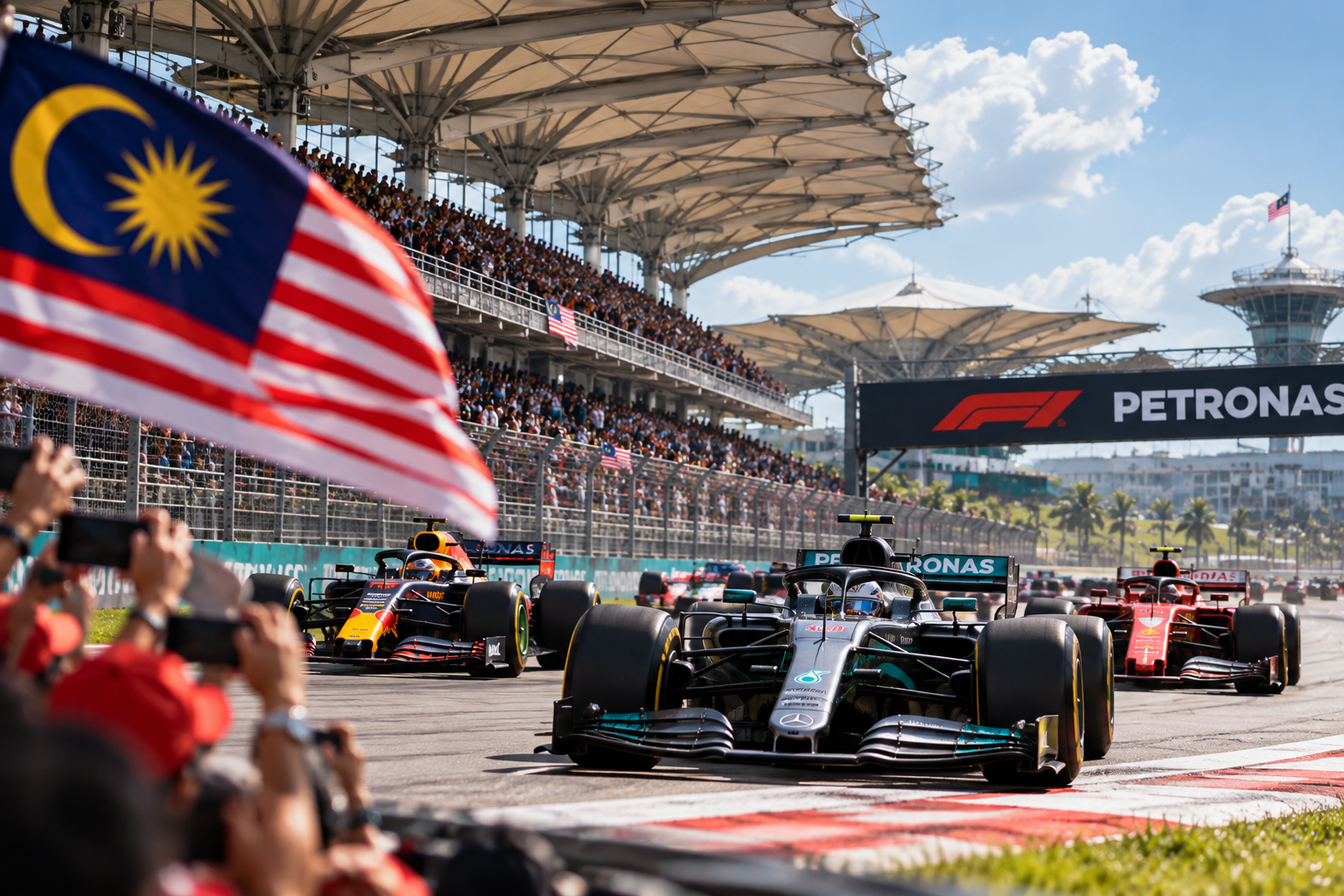
Formula 1 returns to Sepang International Circuit today for the first time since 2017. But officially, Malaysia is hosting the Formula 1 Gulf Air Bahrain Grand Prix in Malaysia, after the Bahrain race was relocated because of the Middle East conflict.
Why it matters: Malaysia gets a rare chance to test the tourism value of Formula 1 without simply recreating the expensive hosting model it abandoned nine years ago.
Listen carefully to the name this weekend.
It is not:
Malaysian Grand Prix.
It is:
Bahrain Grand Prix in Malaysia.
The distinction explains why Formula 1 is suddenly back at Sepang.
The race runs from:
2–4 October.
Why Malaysia?
Sepang already has: F1-standard infrastructure, international airport access, motorsport expertise and experience hosting the championship.
That made it one of the few venues capable of taking over a Grand Prix relatively quickly.
Is F1 permanently back?
No.
Nothing announced so far confirms a permanent Malaysian Grand Prix.
This weekend is a relocated Bahrain event.
Why watch the economics?
The event provides Malaysia with a real-world experiment.
Hotels, restaurants, malls, airlines, Grab drivers and tourism operators can all benefit from international visitors.
The question after Sunday will therefore be less:
“Was the race exciting?”
and more:
“Did enough visitors spend enough money to make hosting worthwhile?”
ET TAKEAWAY
Malaysia spent years asking whether Formula 1 was worth paying for.
This weekend reverses the question:
What if Malaysia can capture much of F1’s tourism value without returning to the old hosting model?
That makes the race interesting even for Malaysians who couldn’t name a single driver.