Malaysia’s AI economy is growing quickly. But preparing for it doesn’t necessarily mean becoming a programmer.
Whenever AI and employment appear in the same sentence, one question tends to dominate:
“Will AI take my job?”
It’s understandable.
But it may not be the most useful question.
A better one is:
“Which parts of my job will AI change — and what should I become better at?”
Malaysia has significant exposure to this transition.
Research by ISEAS examining AI’s potential impact on Malaysia notes that the country’s large services sector is particularly exposed to automation, with deeper automation scenarios potentially affecting hundreds of thousands of roles.
That doesn’t mean hundreds of thousands of Malaysians will suddenly become unemployed.
Jobs can change without disappearing.
Think about accountants
AI can already:
Categorise transactions, analyse spreadsheets, detect anomalies, and draft financial summaries.
Does that mean accountants disappear?
Not necessarily.
It may mean accountants spend less time manually processing information and more time:
Interpreting it, advising businesses, spotting risks, and making decisions.
The job changes.
Same with marketing
AI can generate:
Advertising copy, images, customer analysis, research summaries, and campaign ideas.
So simply producing a basic piece of content becomes less valuable.
Understanding:
The customer, strategy, brand, culture, judgment, and what the business is actually trying to achieve can become more valuable.
The pattern repeats
For lawyers:
AI can search documents.
Humans still make legal judgments.
For engineers:
AI can analyse enormous datasets.
Humans still decide what should be built and whether the solution is safe.
For doctors:
AI can assist with information and pattern recognition.
Doctors remain responsible for clinical judgment and patient care.
The technology handles more tasks.
That doesn’t automatically eliminate the entire occupation.
So what skills become more valuable?
Ironically, some of them are extremely human.
Critical thinking
AI can produce an answer.
Can you tell whether the answer is correct?
Communication
Can you explain something complicated so another human understands it?
Domain expertise
Someone who understands finance and knows how to use AI may be more valuable than someone who merely knows how to prompt an AI tool.
Problem solving
Companies don’t ultimately pay people for knowing software.
They pay people to solve problems.
Adaptability
The tool you learn today may be obsolete three years from now.
The ability to keep learning may become one of the most valuable skills of all.
And yes — technical skills matter too
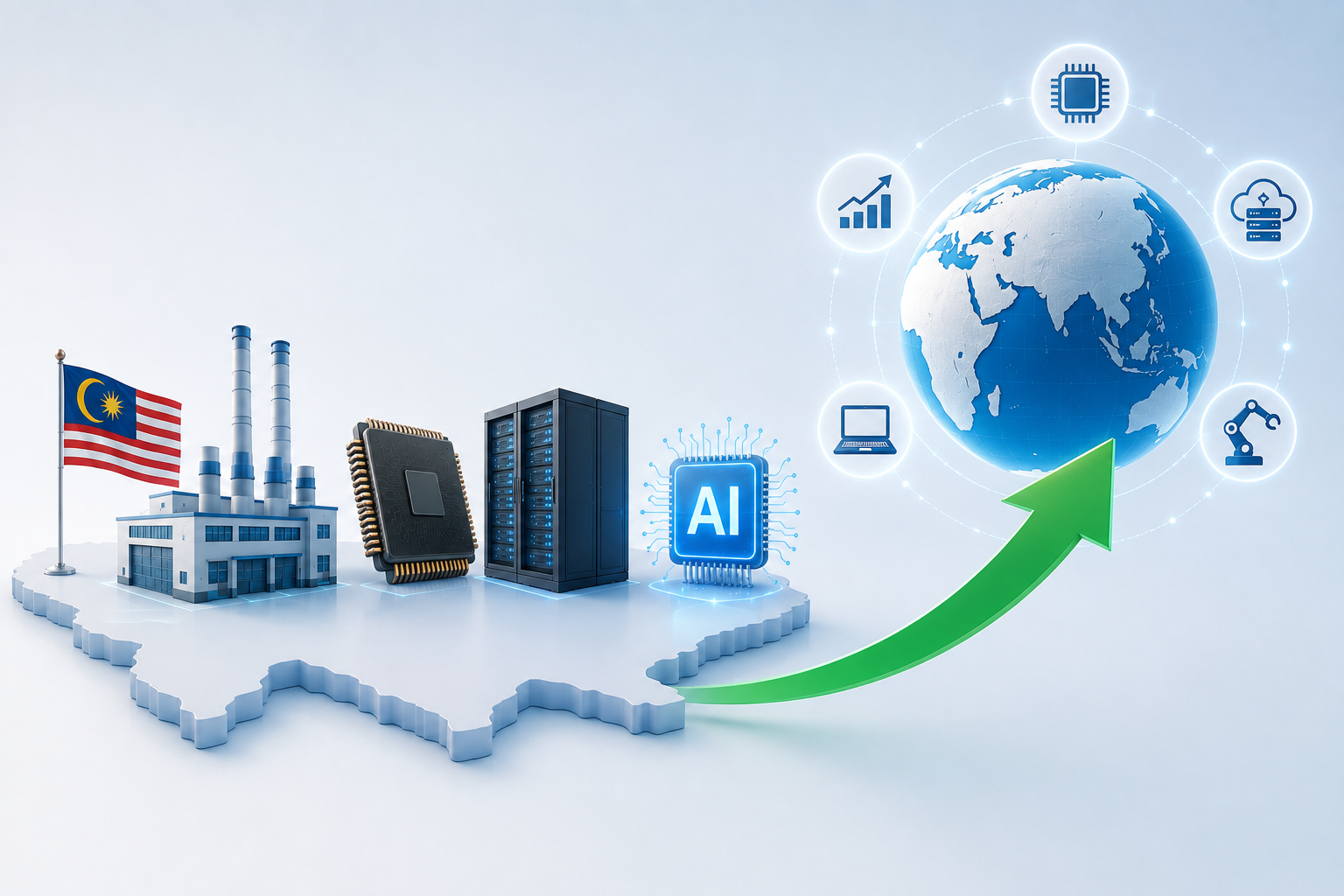
Malaysia is attracting investment in areas such as:
Cloud computing, cybersecurity, data analytics, semiconductors, AI infrastructure, and software engineering.
Those are creating genuine specialist opportunities.
But the AI economy will need more than AI engineers.
It will also need:
Salespeople, finance professionals, project managers, HR teams, lawyers, designers, operations specialists, and entrepreneurs who understand how to work with the technology.
ET TAKEAWAY
Don’t try to compete with AI at what AI does best.
Learn to use it.
Then strengthen the things humans still bring:
Judgment, expertise, creativity, communication and responsibility.
The safest career may not be one that AI cannot touch.
Such jobs may become increasingly rare.
The safer position could be becoming the person who knows how to use AI better within your profession.